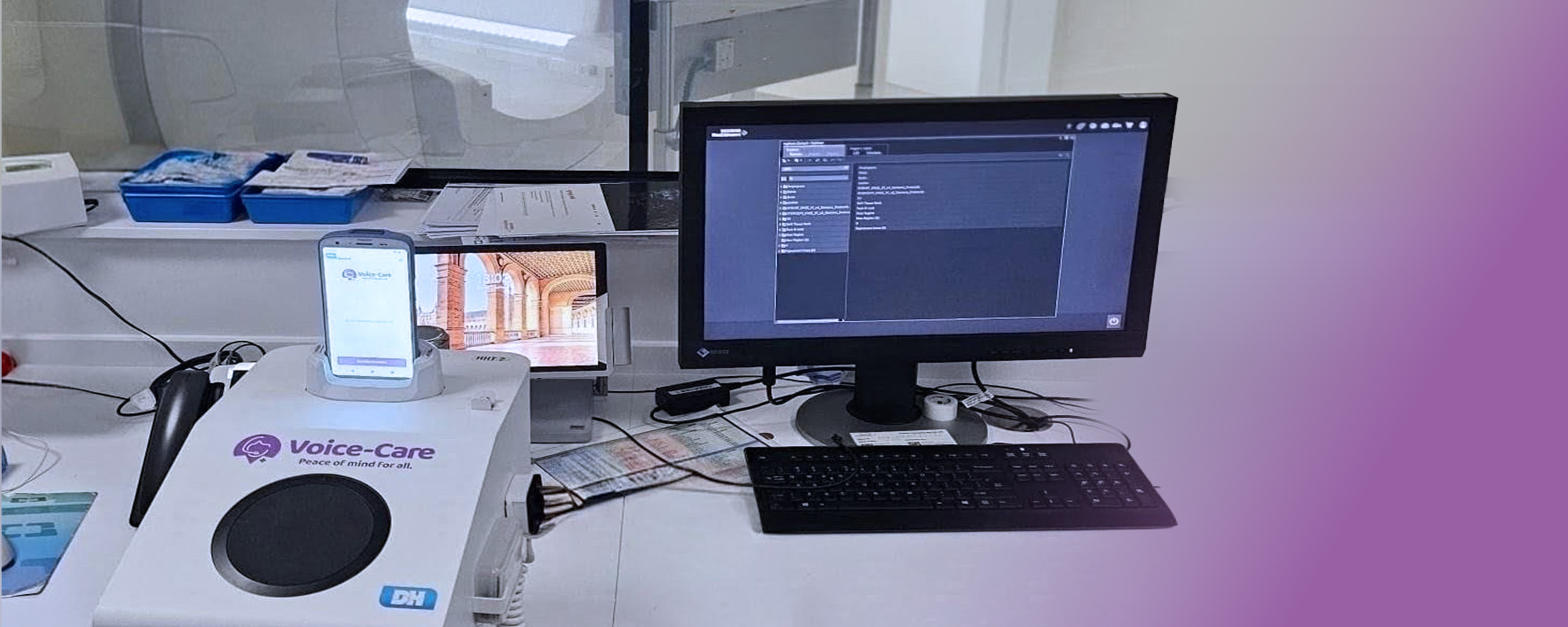
 Voice-Care® International Ltd is delighted to announce that its award-winning Surgical Workflow Solution is being successfully trialed at Cleveland Clinic London to enhance patient safety during critical neurosurgery and radiology processes.
The solution is now being trialed within the neurosurgery operating theatre whereby a patient receives an MRI scan before and during neurosurgery to monitor the progress of a particular operation, such as brain tumor removal or epilepsy treatment.
Voice-Care is being deployed to ensure that all necessary safety precautions are being followed before a patient is transferred from the operating theatre into the MRI scanner. These safety checks involve the Surgeons, the Anaesthetic Teams, Scrub Teams and MRI Teams, with each Team completing and confirming vital safety checks. These include, for example, confirming anaesthetic lines are safe for transfer, that equipment can safely enter the MRI scanner, loose metal items are removed and surgical drapes have been adjusted to maintain patient access.
These safety checks were originally carried out using paper checklists, however the use of Voice-Care has enabled the complete digitalisation of this process, ensuring enhanced patient safety, 100% clinical process compliance and a reduction in administrative burdens, as all data taken from the checks is automatically uploaded to the patient record in real time.
Philip Jarrett, Executive Director at Voice-Care comments, “We are delighted that the trial at Cleveland Clinic London has been successfully deployed. This workflow is different to our ‘typical’ surgical workflow solution, however the use of our solution in this alternative way shows that it can accommodate any variation of surgical workflow; no matter the requirement.”
Dr. Harriet Rogers, Senior MRI Physicist and Clinical Scientist at Cleveland Clinic London concludes,
It has been an amazing experience to work with Voice-Care, as the solutions truly have patient safety and compliance at their core. The digitalisation of the checklists within our radiology and neurosurgery workflows has had such a positive impact on not only the patients in terms of safety and compliance, but the administrative burden has been completely removed as all data is uploaded to the patient record in real time. Relatively few clinical centres perform MRI during surgery, so it has been valuable to explore how this technology can support such a specialised multidisciplinary workflow. The potential of this kind of technology is so vast, and I am very excited to see how other departments will utilise it in the future.